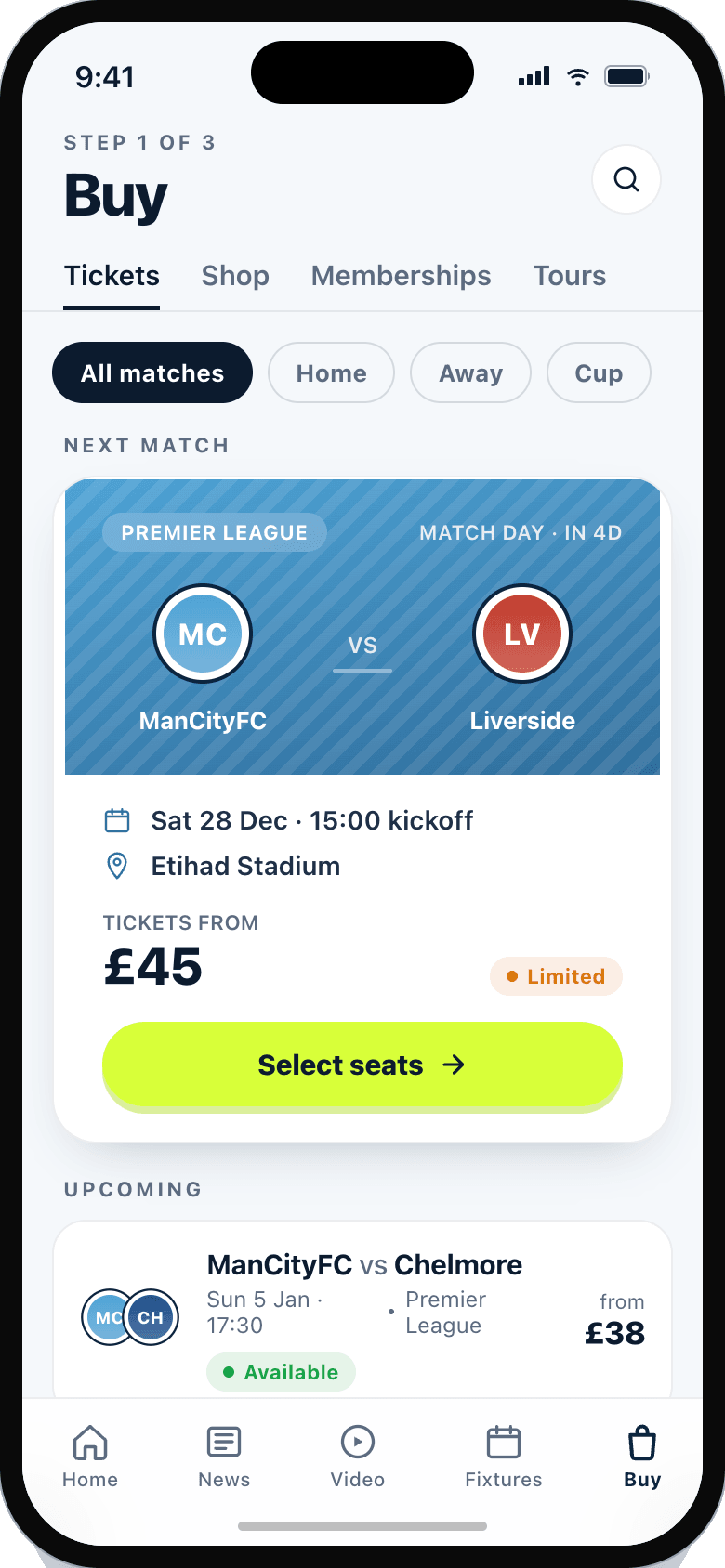
Manchester City: Securing the
Matchday Experience with Biometrics
iOS / Android · Biometric Security · No-Code Architecture
Redesigned the fan experience to prevent ticket fraud using biometric access in a no-code architecture.
A structural problem with matchday access
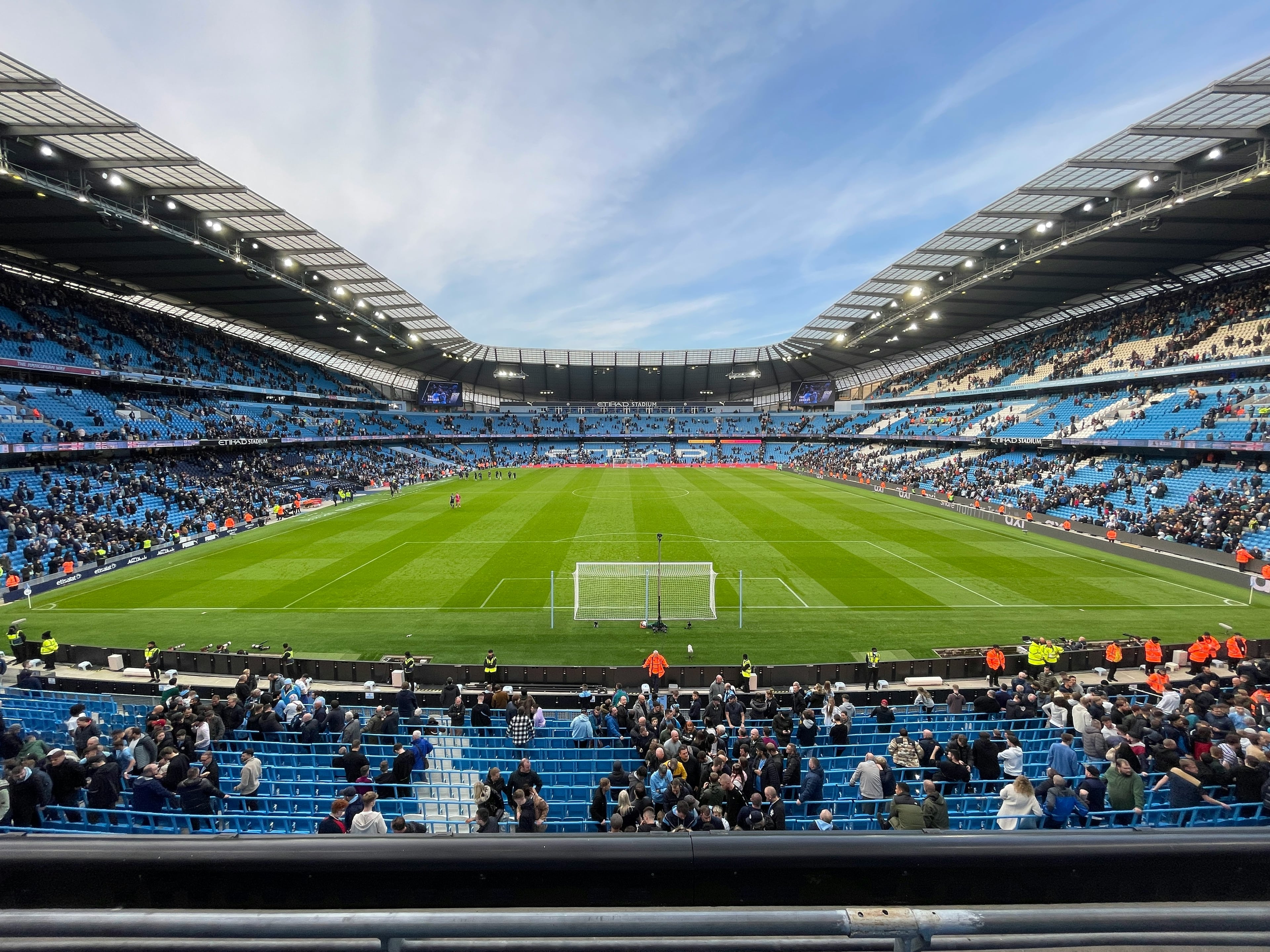
Manchester City Football Club faced a structural problem with matchday access: between 10 and 15% of paid tickets ended up empty on game day. Scalpers were reselling unused seats outside the stadium, and counterfeit QR codes were slipping through the gates.
The Club partnered with our No-Code platform to rebuild ticketing from the ground up. As their first Premier League-tier client, the project carried visibility across the industry. I joined during discovery, before any screen had been designed, working alongside a 4-person No-Code development team against a deadline tied to the season opener.
Security usually means friction.
We couldn't afford that trade-off.
Fans in heightened emotional states. Two-minute tolerance for any hiccup.
53,000 people behind every gate. One failure becomes a press incident.
Banking biometric patterns assume solo, indoors, with time. Stadium queues break every assumption.
Security designed inside the flow. Not on top of it.
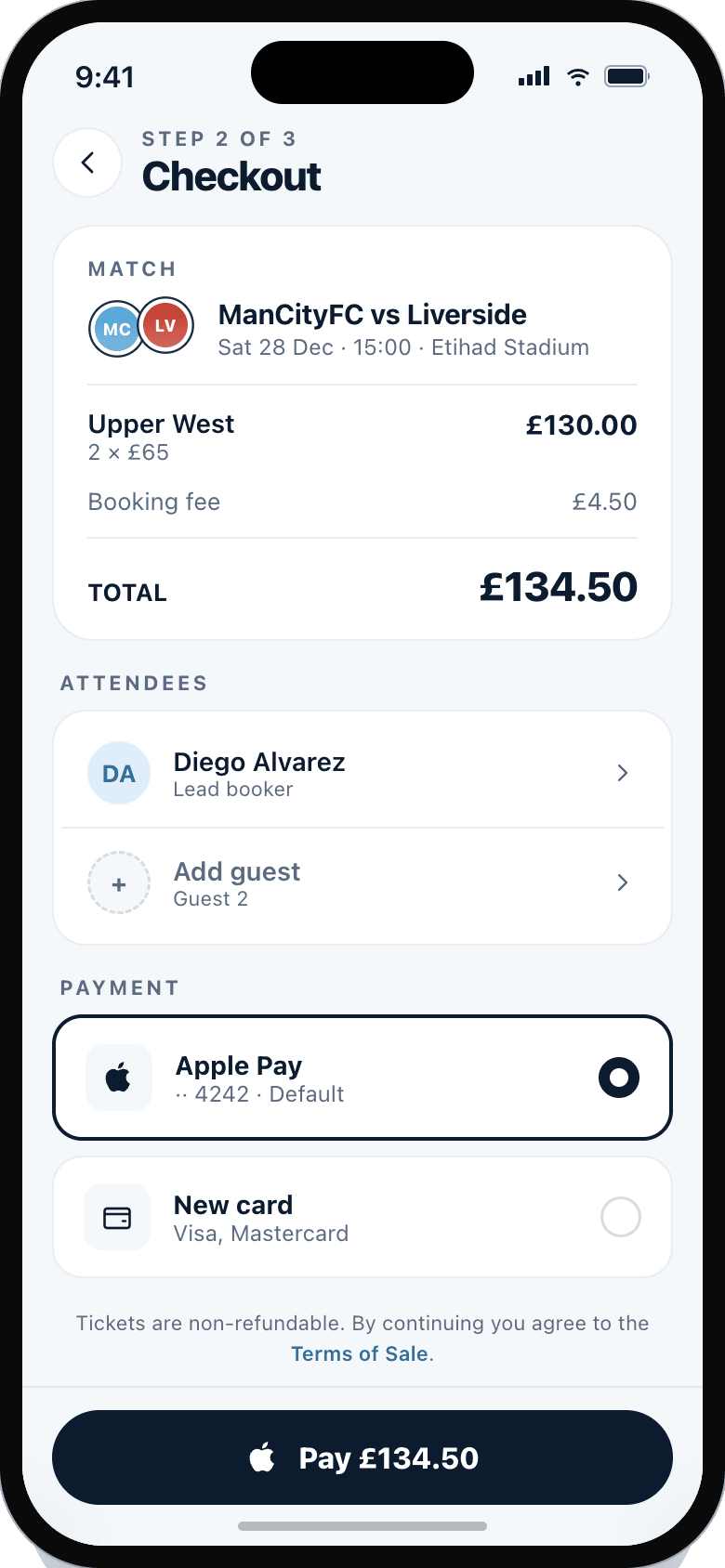
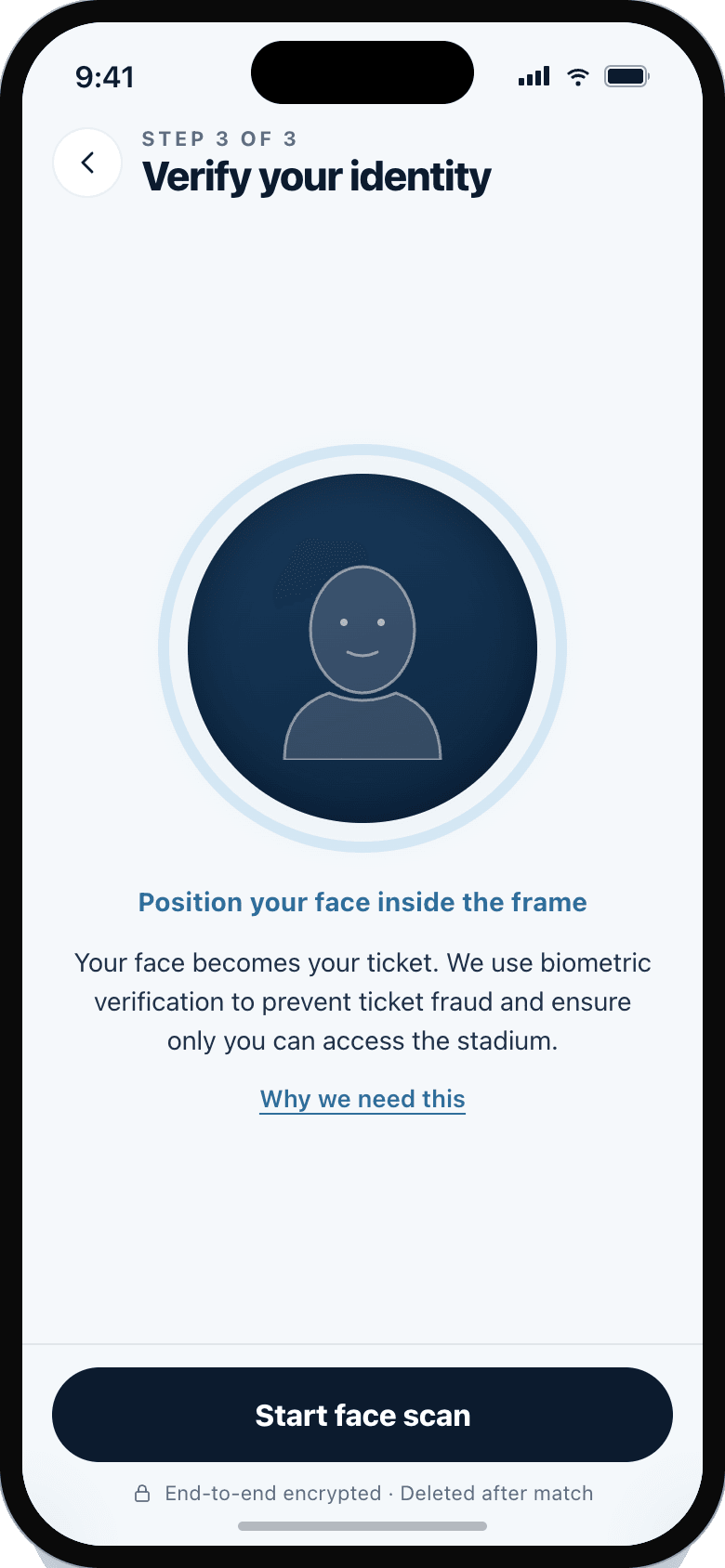
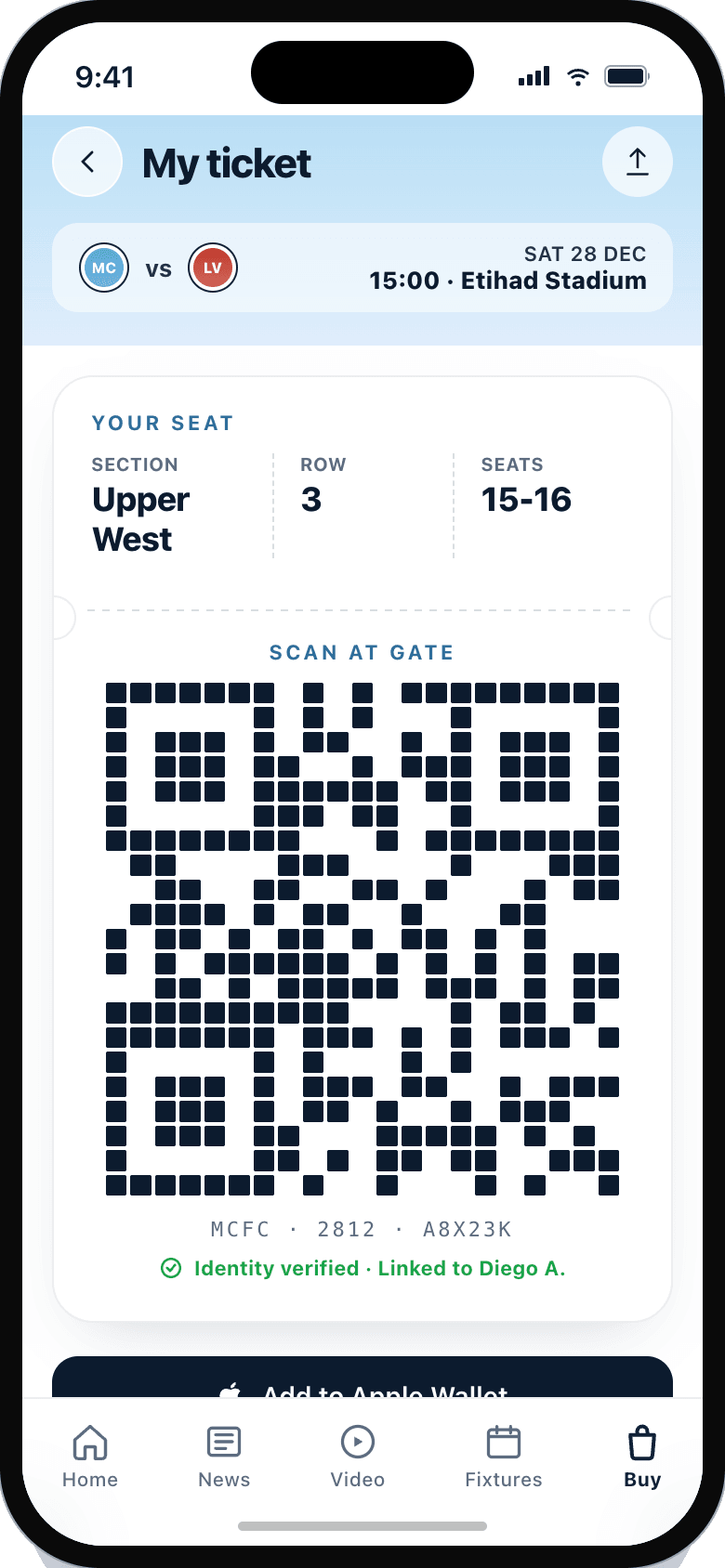
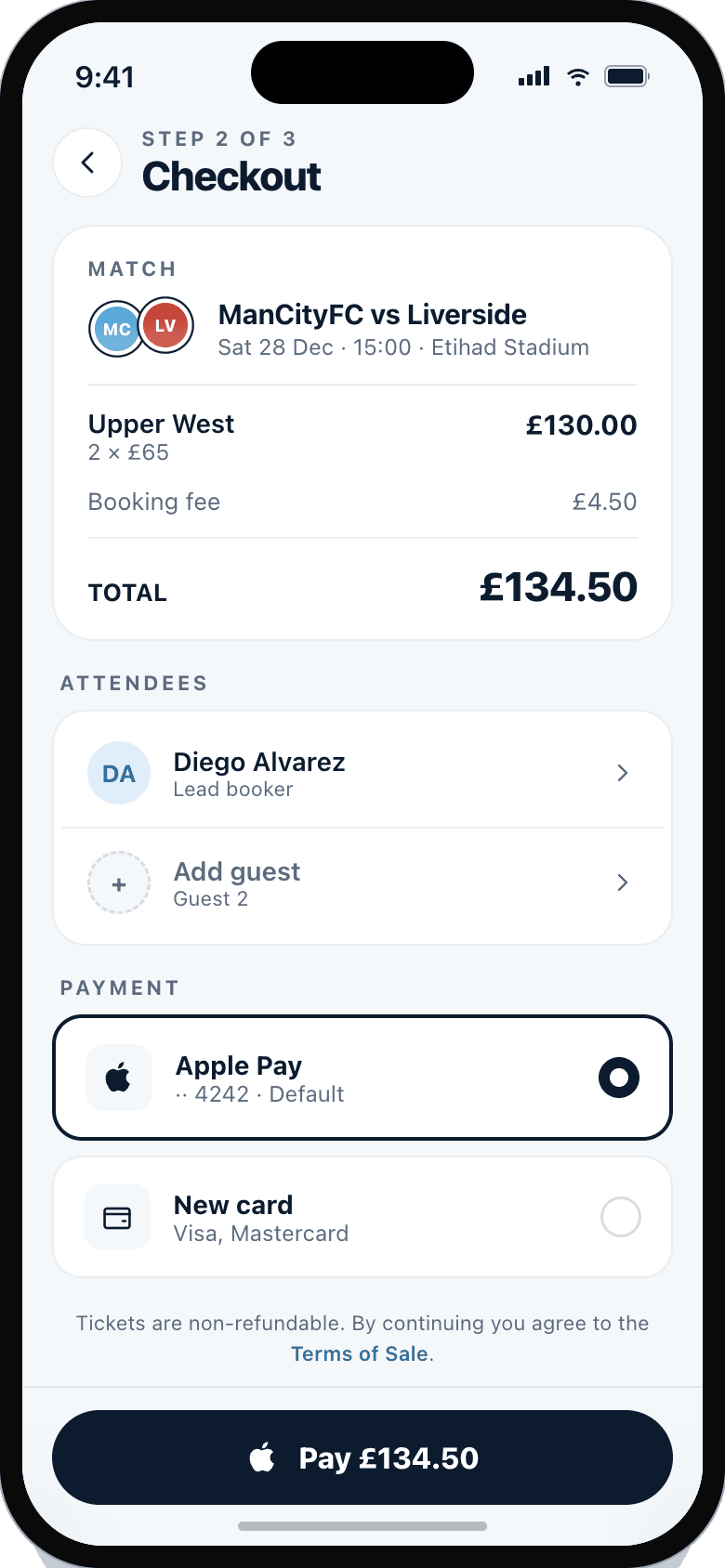
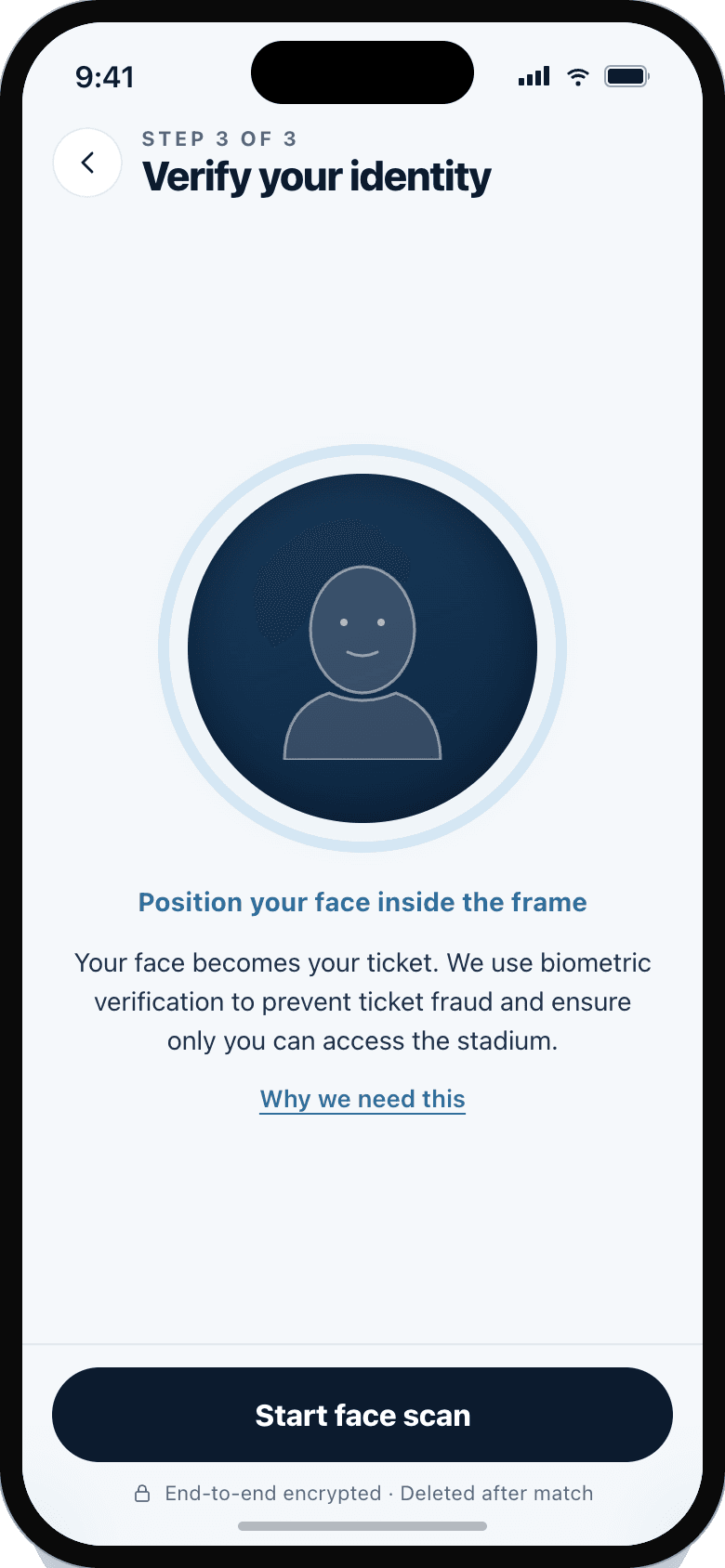
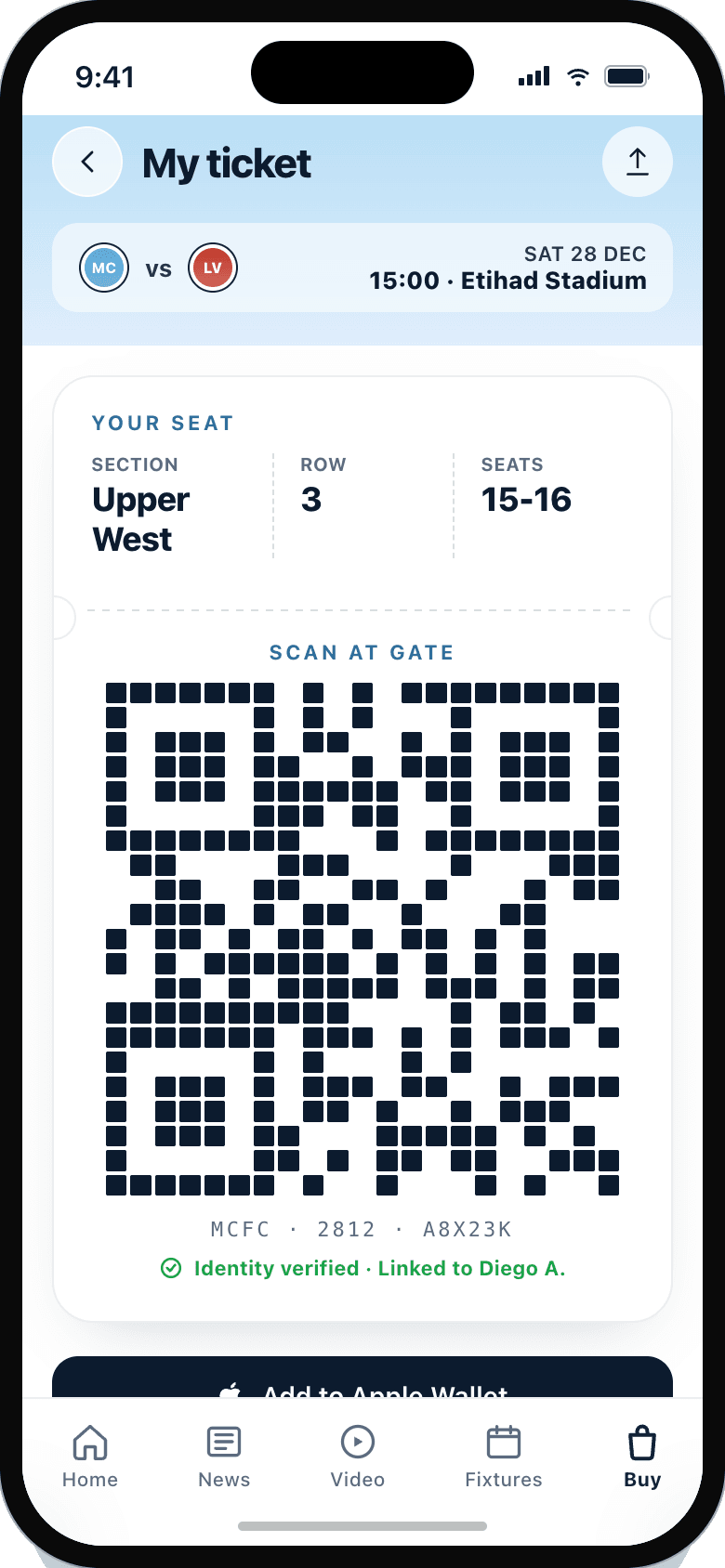
Most ticketing systems treat identity verification as an extra step layered on top of the purchase. We rebuilt the flow so that verification happens once, at the moment of buying, and never again. By the time fans arrive at the gate, their face is already their ticket.
But preventing fraud at the gate solves only half the problem. The other half lives in the seats that never get used.
Recovering empty seats, automatically.
Fans who can't attend release their tickets back to the platform through a few steps. Verified buyers in the queue receive them in real time, with biometric identity already linked. No resale outside official channels, no empty seats on matchday. The same biometric architecture that prevents fraud at the gate also closes the loop on no-shows.
No-Code means different constraints, not fewer decisions.
The platform ran on a proprietary No-Code engine. I worked as both designer and project coordinator, sequencing work across a team of generalist developers. Every Figma file had to be precise enough to build without interpretation.
When a component couldn't be built, that was the constraint doing its job.
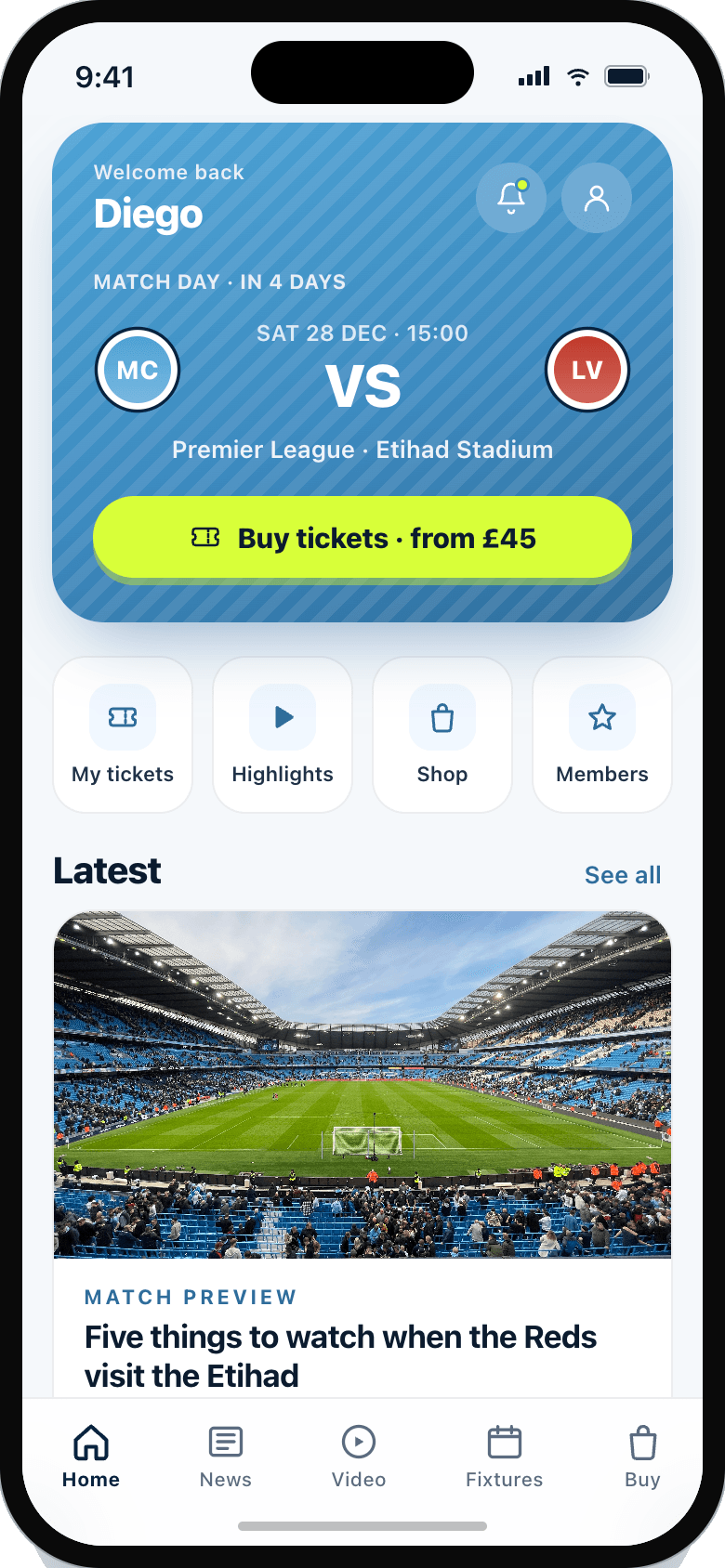
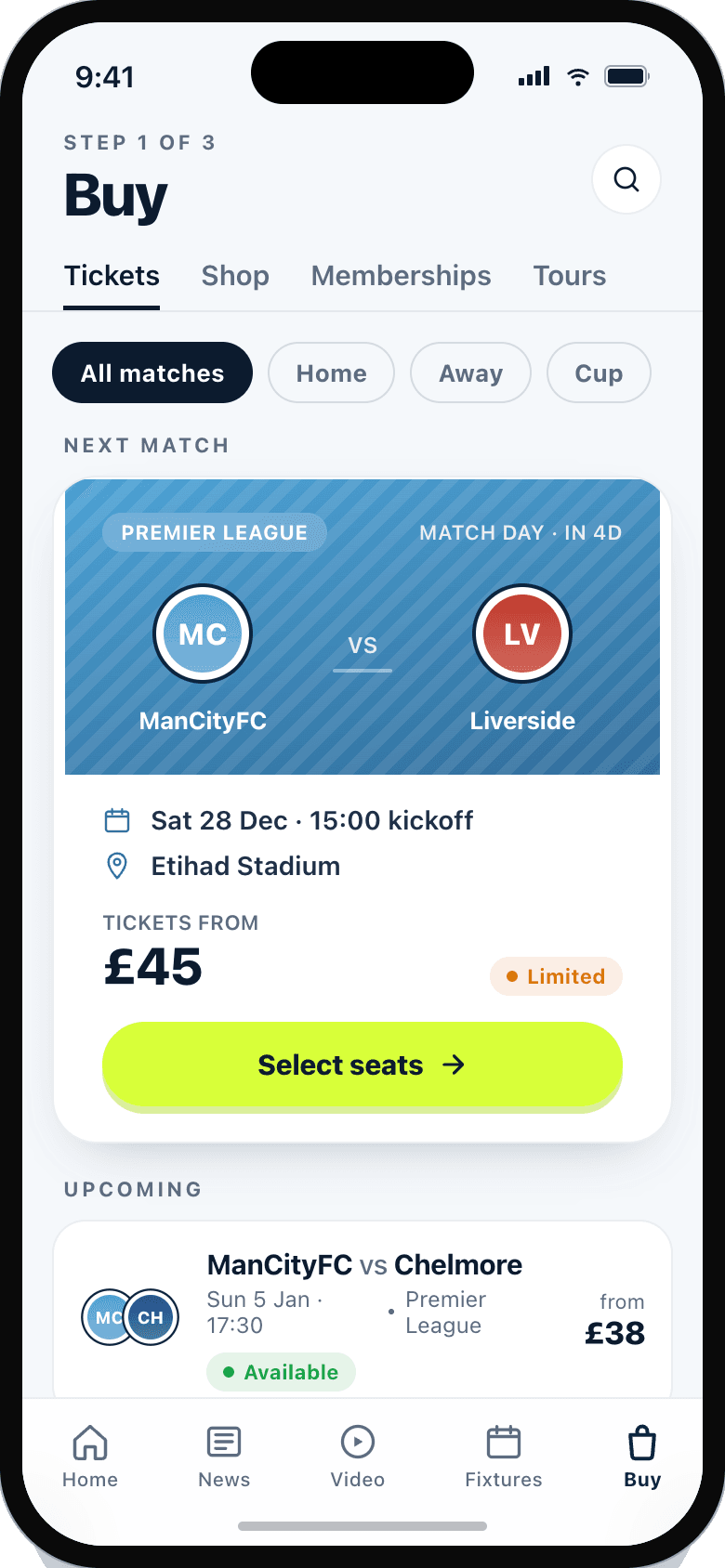
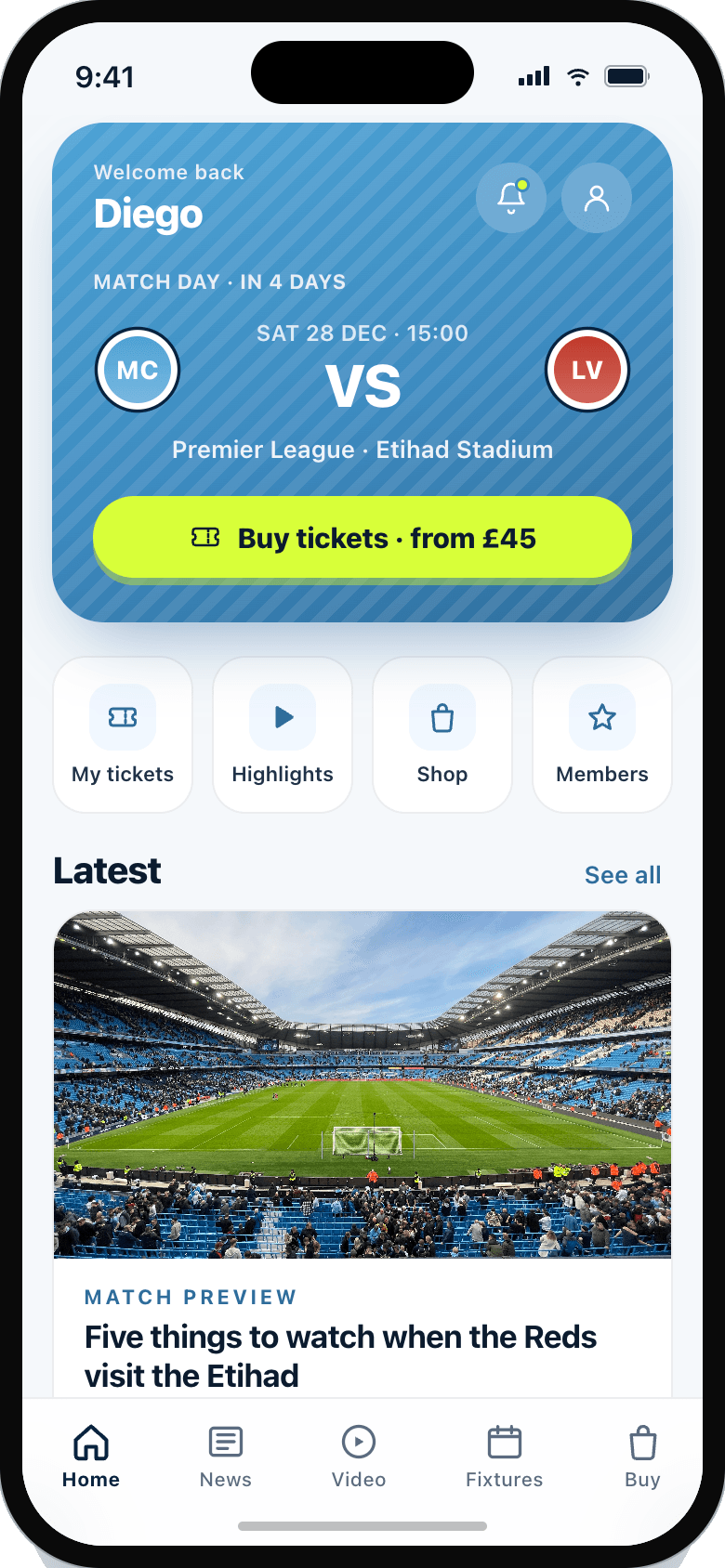
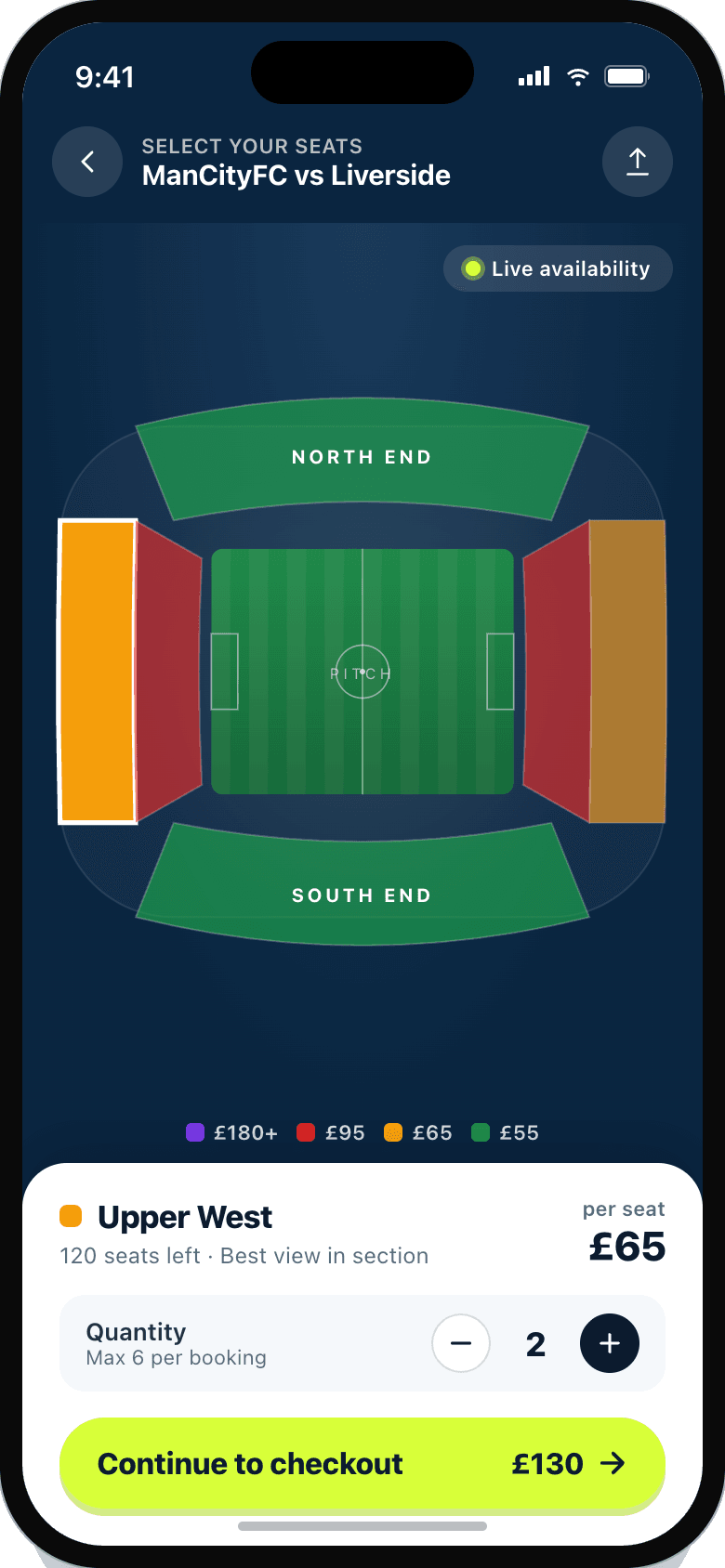
Six screens. One seamless experience.
Shipped to production.
The redesigned ticketing system shipped to production. Following launch, ticket reselling and counterfeit entries were significantly reduced, and the seamless biometric flow recovered thousands of seats per match through the optimized Ticket Exchange.
*Manchester City Group, 2024. Visuals recreated for portfolio.*